
Home/E-commerce with Online Payments
Colombia · E-commerce with online paymentsE-commerce with online payments in Colombia
I build custom-coded online stores that take payments online with Wompi: catalog with prices, cart, checkout, shipping quoted before payment and payment confirmation via webhook. Two stores in production: JL Mercantil and Chonta Lab.
What does an online store with a payment gateway include?
An online store with a payment gateway shows the catalog with prices, lets the customer build a cart and charges online, without the customer having to message on WhatsApp just to be able to pay. The ones I build use Wompi, Bancolombia's payment gateway, which, depending on what each merchant has enabled, accepts debit and credit cards, PSE, Nequi, Daviplata and the Bancolombia transfer button. The order total is calculated on the server, never in the browser; the integrity signature Wompi requires is generated in a Supabase function, and an order is only marked paid when Wompi's webhook confirms the transaction. On top of that come shipping, the sales panel and purchase tracking in Meta. WhatsApp does not go away: it stays as a second channel for people who want to ask before buying.
Why the price is calculated on the server
If the total comes from the browser, anyone with basic skills can change it before paying. That is why the server builds the order with the prices stored in the database, calculates shipping and signs the transaction; the browser only displays what the server already decided.
From storefront to confirmed payment
These are the pieces running in production today in the stores I built:
JL Mercantil — a store with 400+ products
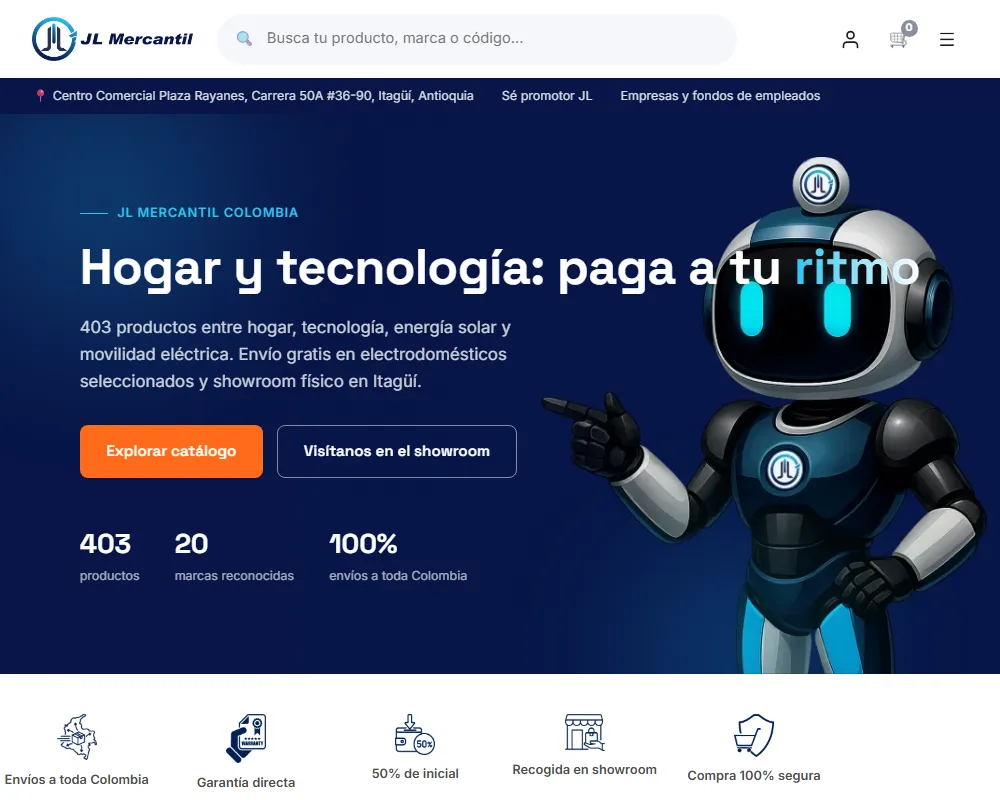
Custom store for JL Mercantil (home, technology, solar energy and e-mobility, with a showroom in Itagüí): more than 400 products, custom checkout with Wompi, shipping quoted with Envía before payment and optional Google sign-in. Shipping labels are generated from the CRM sales panel.
See the JL Mercantil case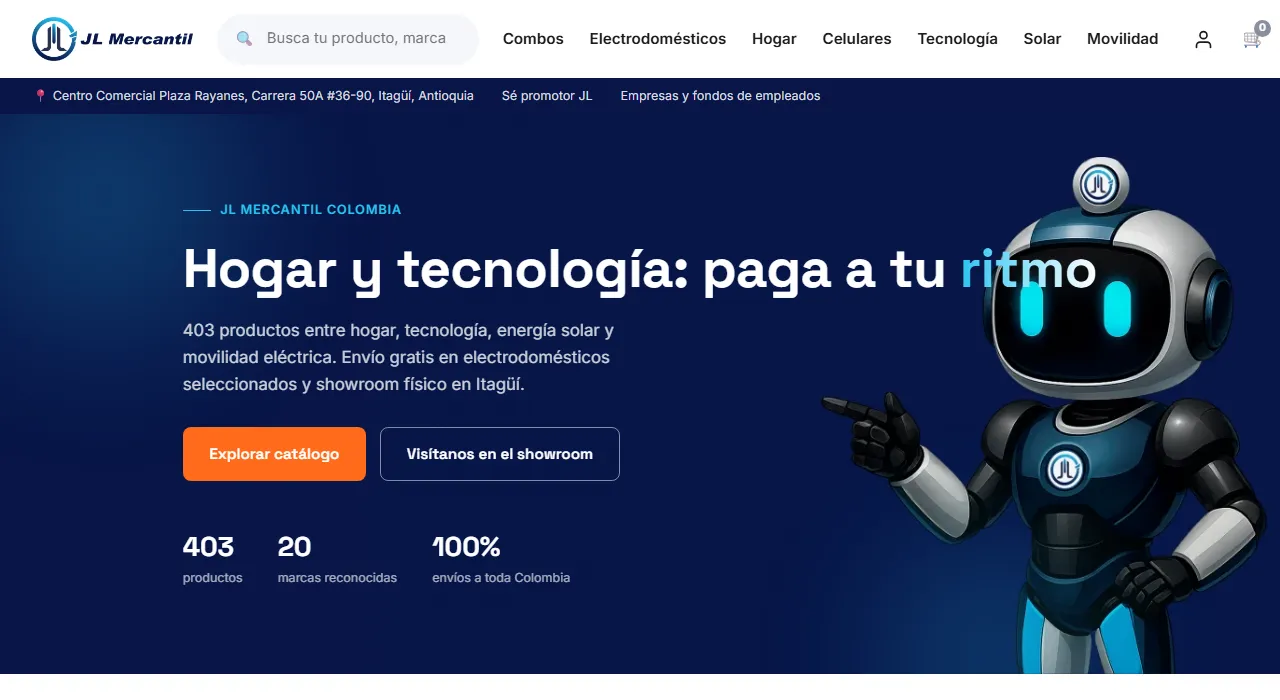
Chonta Lab — from WhatsApp to online payments
Chonta Lab sold its handmade pieces only through WhatsApp, with no published prices. Today the store shows prices, takes payments with Wompi and reports every purchase to Meta from the server with the Conversions API, with deduplication confirmed by Meta. Its 53-piece catalog feeds its Meta ads.
See the Chonta Lab case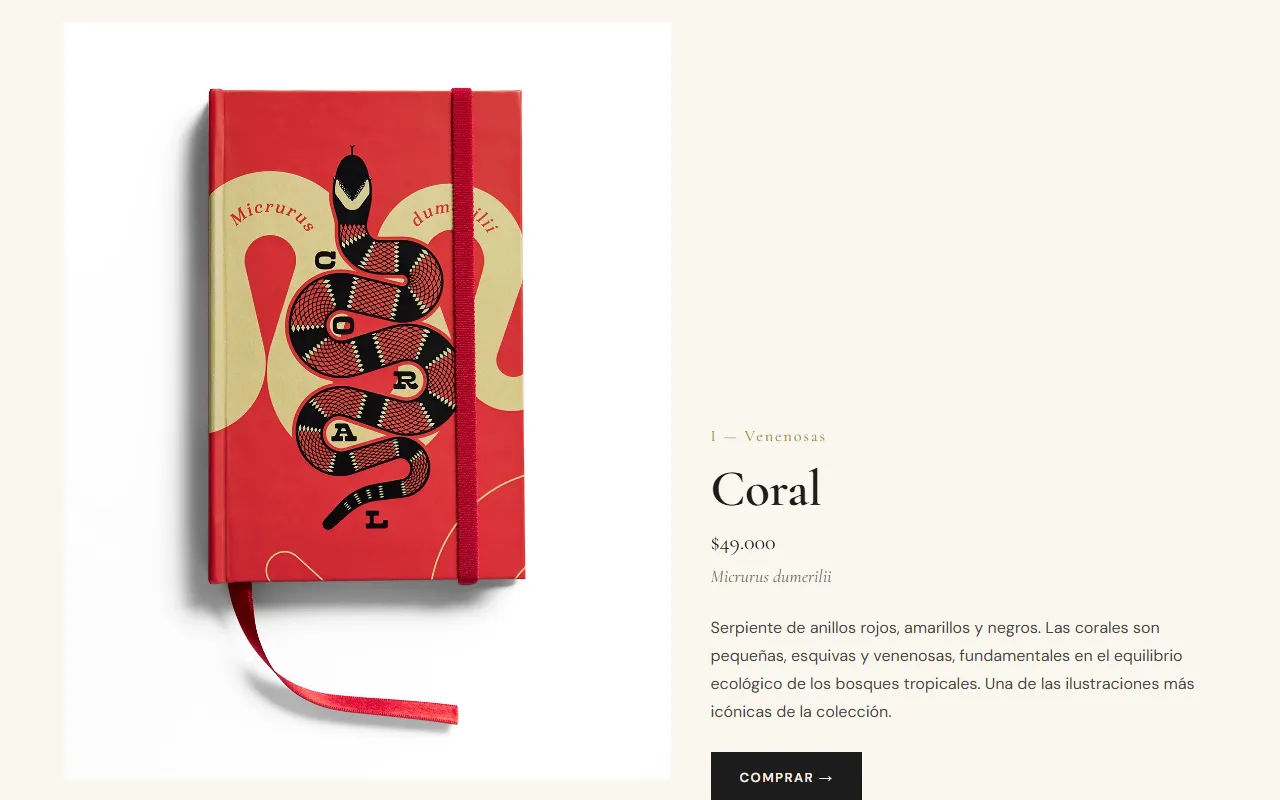
What people ask me most
Wompi is Bancolombia's payment gateway. Depending on what the merchant has enabled on its account, it accepts debit and credit cards, PSE, Nequi, Daviplata, the Bancolombia transfer button and cash payments at banking agents. The money goes to the merchant's account, not mine.
Both work. With custom code the store loads fast, checkout adapts to the business (shipping, showroom pickup, pricing rules) and there is no platform subscription; in exchange, every change needs someone technical. Shopify makes sense when the team wants to manage everything on its own from a dashboard.
Through Wompi's webhook: when the transaction is approved, Wompi notifies the server with a signed event, the server verifies the signature and only then marks the order as paid. If the customer closes the window halfway through, the order is not marked paid by mistake.
Yes. The browser pixel and the server-side Conversions API send the same purchase with the same identifier, and Meta counts it once. The purchase is only reported when the payment is approved, so campaigns learn from real sales, not attempts.
Yes. At Chonta Lab the WhatsApp button stayed as a second channel for people who want to ask before buying, and at JL Mercantil the WhatsApp bot answers questions while the purchase happens on the website.
30 minutes. A clear map of what to automate first.
Book a session over Google Meet. You leave with a concrete plan even if we never work together.
Book a discovery call